Beyond Sustainability: Building Hotel Brand Value Through Conservation
By Adam and Larry Mogelonsky | September 29, 2026
Disclaimer: The views and opinions expressed in this guest column are those of the author and do not necessarily reflect the official policy or position of Hotel Interactive. The author may have an interest in the products, services, or business entities referenced in this article. Hotel Interactive is not responsible for the opinions or factual assertions made by the author.
This is a hotel brand story out of sub-Saharan Africa that represents the pinnacle of sustainability, conservation and land stewardship. You may be thinking, “What does this have to do with my hotel in the United States?” The answer is: Guests care more deeply about sustainability than you think.
In fact, it can be argued that you cannot have a luxury hotel nowadays without a strong sustainability focus. That goes for both back of house for energy efficiency and supply chain traceability, as well as front of house in terms of eco-friendly experiences. In this profile, we will detail how one conservation-led company illustrates how sustainability is no longer a nice-to-have; it’s a matter of protecting long-term asset value.
Where to start the story? “If we take care of nature, nature will take care of us in return,” is the moving and ever-poignant mantra repeated often by Charles Nsabimana, the conservationist at Singita, a conservation and ecotourism safari brand with properties in South Africa, Zimbabwe, Tanzania and Rwanda.
At first blush, a North American hotelier may think, “African lodges are a totally dissimilar category of hotels from where I operate, so there’s nothing to learn here.” That, my friend, is the wrong attitude! In 2026, and only bound to increase as the years go on, travelers are looking for hospitality brands with meaning, with purpose and that fight for a good cause.
With climate change being what it is, there’s perhaps no better cause to fight for than the protection of biodiversity and the wild landscapes of this beautiful planet we all call home.
In this context, the term “sustainability” is righteous but ultimately reductive. Sustainability is a checklist that incentivizes doing the bare minimum to obtain some degree of certification or passing grade. What Singita and other brands are doing goes far beyond sustainability and into the realm of regeneration, land stewardship and cultural stewardship, where the concept is to not only preserve the history of the region but to also fully embrace it by bringing it to the forefront of the guest experience and design.
The Triple Bottom Line (TBL)
Singita is a company that has taken meticulous efforts to promote conservation and environmentalism, and then woven those efforts into the brand’s storytelling. The result is a hospitality experience where conservation is not some tucked-away corporate initiative but a highly visible part of what the guest sees, feels and remembers.
This hospitality brand makes perhaps the strongest argument for the reciprocal relationship promised by the triple bottom line (TBL). While this sustainability framework of people, planet and profit was largely proposed to highlight the benefits for brand recognition, corporate culture and employee retention — that is, “mission-driven brands” or “brands with purpose” — it has an additional application for hospitality.
Guests of all walks, especially luxury travelers, are now actively voting with their wallets for leisure, corporate and group stays where environmentalism is a central element of both the back-of-house efficiency protocols as well as the felt experience.
All told, the future of numerous hotel brands will in part depend on their stewardship programs as a means of generating demand and growth. It’s this “power of purpose” (as Singita calls it) that will help hotel brands evolve to deepen their benefits for guests, the planet and, yes, the income statement. From here, we focus on what Singita and its partnership with its conservation NGOs are doing to show all the programs that come together to make conservation a full-fledged part of the brand DNA.
Singita’s Conservation Efforts
Singita means “place of miracles,” and its meaning has never been more deeply felt than now. Founded in 1993, Singita opened its first Ebony Lodge and expanded its presence over the next two decades, spanning close to one million acres of protected land across South Africa, Zimbabwe, Tanzania and Rwanda. This is not just about maintaining wildlife reserves; it’s about rebuilding ecosystems and restoring nature for future generations while also showcasing these efforts to the public through sustainability tourism.
Over the past few decades, Singita has emerged as a leader in the conservation of 45,000 acres of untouched wilderness in South Africa known as the “Big Cat Country,” due to its lion and leopard populations. Its mission is more than just luxury hospitality; part of its 100-year vision is to facilitate the protection and preservation of large areas of the African wilderness for future generations.
And this long-term planning is an important lesson for every hotel because, for example, rewilding a wilderness landscape can take 15 years or longer. You can’t just replant rows of a single species of tree; rewilding requires patience, knowledge and gentle oversight to let the land do its thing.
The company’s commitment is to return the landscapes to their natural state, enabling wildlife to roam freely without human interference. Through its combined efforts and resources, Singita focuses on four areas across all landscapes: halting and reversing biodiversity loss, preventing further extinction of species, halving its ecological footprint and strengthening community collaborations.
As mentioned previously, Singita partners with conservation NGOs in the regions in which it operates. Their community partnership programs — the cultural stewardship side — encompass a range of socioeconomic interventions that support and promote access to quality education, professional skills development, job creation, rural enterprise development, environmental awareness, sustainable resource use and women’s empowerment.
In 2020, Singita launched a carbon offset program to compensate for emissions from staff flights and guest bed nights. This commitment builds on its investment in renewable energy alternatives, while monitoring and reducing energy usage across all properties.
Each Region’s Nature-Based Tourism
As they say, the story is in the specificity. The following examples show how some of the details on the conservation projects undertaken at each Singita property to show how they differ and are adapted to the locality while still fitting within the broader TBL framework.
Singita Kruger National Park & Sabi Sand (South Africa):
- Supporting the rehabilitation and rewilding of rhinos orphaned by poaching
- Funding highly skilled anti-poaching scouts and canine units who protect against rhino poaching, snaring and poisoning 24/7 in the Sabi Sand
- Supporting Panthera, the NGO using science to restore populations of leopards in this region, now among the most visible and healthy in Africa
- Providing professional chef qualification for selected youths from the nearby communities through the Singita Community Culinary School
Singita Grumeti (Tanzania):
- Supporting the Grumeti Fund, transforming 350,000 acres into a haven for the Great Migration and supporting the Grumeti Fund’s anti-poaching units
- Elephant monitoring and local ecological research
- Supporting community outreach programs for primary and early school education, culinary school, enterprise development or women’s empowerment
Singita Malilangwe (Zimbabwe):
- Supporting the anti-poaching unit after successfully introducing black and white rhino
- Nutrition program supporting neighboring community school children whose families that rely on subsistence farming in the face of unpredictable rainfall patterns
- Conservation education program for communities to understand the practices and benefits of regenerative land management
Singita Volcanoes National Park (Rwanda):
- Preserving natural heritage by protecting Rwanda’s endangered mountain gorillas
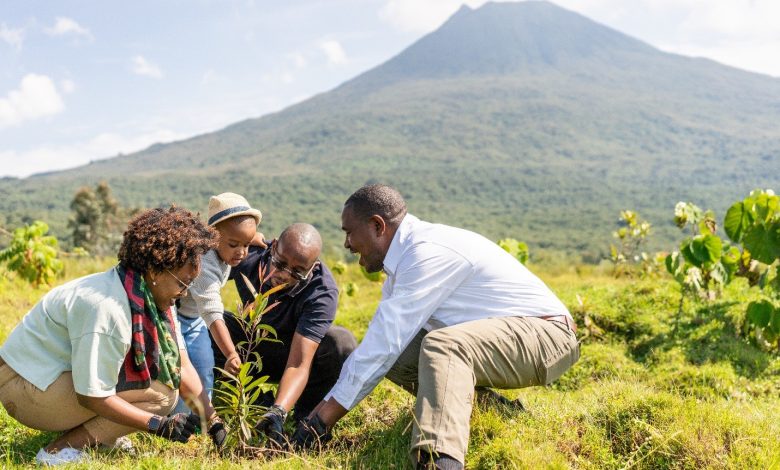
- Reforestation of the buffer zone to Rwanda’s Volcanoes National Park
- Monitoring program in partnership with the Dian Fossey Gorilla Fund
- Establishing a third culinary school in 2021 for young adults from local communities to help them pursue a career in hospitality
Overall, hospitality is an industry focused on the generation of joy as well as doing good by helping bring like-minded people together from around the world. Still, much more will be required of us as we all yearn for a greener, brighter future.
There’s also a very strong business case for going through the painstaking work required to establish a TBL mindset and maintain a 100-year vision. As these Singita lodge examples show, the proof is in the pudding: If we take care of nature, nature will not just take care of us in return but can also support strong financial returns for years to come.


