FSM 2026: Looking Beyond Price When Deciding What’s Worth the Investment
From the Hotel Interactive Newsroom | October 13, 2026
At Food Service Management Summit 2026, food service leaders took on a seemingly simple question: What is worth the investment?
The answers showed why purchase price often reveals only a small part of actual value.
Held Oct. 4-6 at The Wigwam luxury resort in Litchfield Park, Ariz., the FSM Summit brought together buyers and suppliers in institutional food service management for in-person networking and relationship-building opportunities. Culinary educator and entrepreneur Zee Moussa led a panel discussion that explored how operators evaluate products, technology, suppliers and people investments that have to work in real operating environments.
For operators in hospitality, senior living, public education and specialty food, investment decisions are tied to operational reliability, labor, trust, scale, employee retention and the customer experience. Speakers described purchases that cost more than expected and supplier relationships that failed when promises did not translate into day-to-day performance. They also described investments that paid off in measurable ways, from savings and production capacity to staff retention and guest reviews.
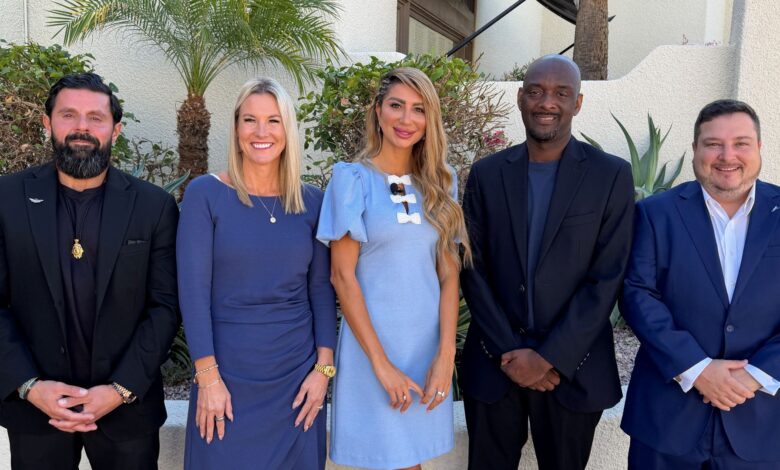
Joining Moussa for the discussion were Jillian Gessell, corporate director of nutrition and culinary services at Presbyterian Homes & Services; Ahmad Hashem, COO of Hashems 1959; Chef Manuel “Manny” Rodriguez, corporate director of food and beverage at Innisfree Hotels; and Aaron Smith, director of culinary services for Seattle Public Schools.
Price Is Only the Starting Point
Gessell said the return on an investment in senior living cannot always be judged through a traditional financial calculation. Senior living, she said, is “a little bit different” from a standalone restaurant or a hotel.
“When looking at investments, we oftentimes have to stand back from that ROI and really lean into the value of investment,” Gessell said. “So, what is the value going to be for our residents?”
That value can still be measured. When evaluating a rollout, Gessell said, Presbyterian Homes & Services looks at plate waste, resident and family net promoter scores and clinical outcomes such as unintentional weight loss. She said those resident-centered measures and the financial return correlate when an organization does right by its residents.
“If we do the right thing for our residents and the people that we serve, you are going to see that the trajectory of the positive NPS and the ROI, that the bottom line, they’re gonna correlate,” she said. “If you do the right thing, the bottom line, your P&L is gonna show that.”
Smith described a similar calculation in public school food service, where Seattle Public Schools serves about 50,000 students a day on a fixed public budget. For him, innovation is not separate from the mission.
“Innovation, to me, is the mission because our mission is to feed as many students as possible,” Smith said.
That logic affects what he will and will not cut when budgets tighten. Smith said he refuses to cut the food budget because it helps the district attract and keep students. A menu item that costs significantly more, he said, can make up the difference if it brings in an extra 100 students a day.
“Our food budget is what brings the students in,” he said. “That’s the one thing that keeps them coming back, and that’s the main thing that will attract the new customers.”
Technology Pays Off, but Only If It Works
Not every technology investment on the panel was a cautionary tale. Hashem said the one that paid off for Hashems 1959 was a system the company built itself. He said he searched “for so long” for the right POS and inventory management tools and found that “nothing would work” to connect them. After hiring outside companies, he said, he eventually brought in people to help him build his own, which he called “very instrumental” for the company.
Hashems 1959 spans importing, processing, roasting, supplying, wholesaling, distributing and retail. Hashem said technology has helped reduce communication issues, improve quality control and create a better working environment.
Gessell also cited technology as her organization’s most impactful investment of the past 12 months. She said AI-driven inventory and procurement software has produced “a substantial amount of savings in food cost,” along with labor savings.
But the panelists were just as direct about what goes wrong. Rodriguez, who oversees food and beverage across roughly 30 properties, said systems that promise easy integration can quickly become expensive when support or reliability fall short.
“The one that cost me more was systems,” he said. “Thinking it was, you know, ‘It’s going to be great. We’re going to integrate every hotel. We’re going to do room charges. We’re gonna do this. This is the perfect system.’ Well, it’s not.”
Rodriguez said failed systems can force operators to break contracts and spend more time and money finding a replacement, with the risk of repeating the mistake. In response to an audience question, he said he spent close to $100,000 at one restaurant on a system he described as “the most advanced and expensive one.” The extra support he paid for turned into ticket after ticket, he said, without a resolution.
He described how that plays out in practice: with 1,200 rooms on the beach, a busy Saturday restaurant shift and credit card processing down, the real cost was not only the system itself. It was the lack of timely support when the operation needed help.
“Cost is not the issue sometimes,” Rodriguez said. “It’s more who’s going to jump in and solve it.”
Gessell said her organization’s success with AI-driven software came only after several attempts. “We had many vendors come in and overpromise and underperform,” she said.
Smith said Seattle Public Schools had a similar experience with inventory software.
“We went through so many different inventory/back-of-the-house software companies that promised customization that never customized,” he said. In hindsight, he said, “just a little bit more time in planning and testing would have saved us a lot of time, hours we spent on failed implementation.”
Hashem’s advice was to slow down.
“Take your time,” he said. “Make sure to get some help because there’s a lot out there.”
He said it took his business “maybe over a year and a half” to get to a test pilot, and that operators should design for multiple locations from the start rather than for a single site.
“Don’t get married to anything,” Hashem said. “Slowly test something in a sandbox, and then when it works, start to see how it scales. But scale has to be in the original design.”
Rodriguez described a similar discipline for a portfolio as varied as his. His Pensacola properties alone include six hotels within about 100 yards of each other, with rates ranging from $150 to $1,000 a room night, and what works in Pensacola may not work in Panama City Beach or South Carolina, he said. His approach is to find the niche where a product might be used, then pilot it at one location, ideally his most versatile, before expanding to other markets.
“First, know what you don’t know, and then move from there,” Rodriguez said.
Gessell added that leaders also need to know when to end an investment that is not working.
“If there are times when you know that it’s not going to work, just cut ties,” she said. “Why continue to invest money in a software, a product, an initiative that you know isn’t going to be the right fit?”
Big Investments That Paid Off
While software produced some of the panel’s most pointed cautions, large operational investments drew some of the strongest examples of long-term value.
Gessell pointed to a central kitchen that required millions of dollars in equipment and significant work to launch. The investment now supports production across local sites and has expanded the organization’s reach into the community.
“With that central kitchen, we started a Meals on Wheels program, and we’re delivering approximately 1.2 million meals in the community to underserved seniors,” she said.
The kitchen also allows the organization to produce soups, sauces, whole muscle meats and some entrees for its local sites.
Smith said Seattle Public Schools also saw major value from building out a central kitchen facility. The investment gave the district more control over its supply chain, helped lower food costs and supported culturally representative meals for students. The facility includes a meat processing room and a vegetable processing room, which Smith said allow the district “to purchase more from local farmers, local ranchers.”
It also increased production capacity.
“We’ve been able to increase our production from being able to cook 30,000 meals a day to at max capacity 100,000 meals a day we can fully cook and chill for distribution,” Smith said.
Rodriguez pointed to a bakery as an investment that was difficult to implement but worth the effort. He said the move allowed hotels and restaurants in Pensacola Beach to serve fresh homemade desserts rather than frozen products, and the company sells them as well.
“I said, ‘Look, we gotta end the meal in a good note, and we’re doing all this, but we’re giving that frozen dessert,'” he said.
Suppliers Are Selling Trust
For the suppliers in the room, the panel’s message was direct: Operators are not only evaluating products. They are evaluating whether a supplier understands the business well enough to be trusted.
Rodriguez said suppliers lose him not by wasting his time but by losing his trust.
“To me, it’s not about losing my interest; it’s about losing my trust,” he said.
The trouble starts, he said, when a chef reports “issues with consistency” or substitutions made “without even letting us know.” He said he measures a vendor by whether it can “actually solve my issue within 24 hours at least.”
“I always treat every vendor like a partner,” Rodriguez said. “It’s a two-way street. I’m not trying to nickel and dime them. They also need to make a living.”
Smith said listening is one of the clearest signs that a supplier may be able to earn trust. He said that if a supplier isn’t listening up front, “then I don’t trust you to listen to me if we start doing business together.”
For school food service, delivery failures can disrupt more than one transaction. A shortage, or a promised delivery that “shows up a month later,” can disrupt “the entire supply chain from us receiving it, producing, redistributing,” Smith said.
Gessell said suppliers also need to understand the environment they are selling into. A pitch for senior living cannot be the same pitch used for a hotel or restaurant.
“We’re very unique, you know, highly regulated environment,” she said. “It’s important that you come and you know about modified diets. You know about specialized diets.”
For Hashem, value also depends on relationships deeper in the supply chain. He said the company works directly with small-batch farmers, including some in economically distressed areas. Some of those farmers make $50 a month, he said, and the company pays them three times as much while still bringing distinctive products to customers.
“Since our mission is to bridge cultural gaps through good food, that’s one of our duties to continuously get the best product from the best source by the best people growing it, and then using the best practices to get that to our clients,” he said.
Invest in the People Who Make It Work
Several panelists argued that some of the most important investments are harder to capture on a spreadsheet: wages, retention, leadership development, environment and care for employees.
Gessell said hourly wage increases have helped attract workers, but retention depends on what happens after they are hired.
“How do you keep them? How do you increase your retention?” she said. “I think what we’ve done to really move the dial is to meet our employees where they’re at.”
That includes scheduling flexibility, internal education, leadership training and career pathways that may keep an employee within the organization even if they eventually move out of culinary.
Rodriguez said believing in people can also produce measurable results. He described keeping a job open for a cook who had struggled early in his career. The cook is now general manager of three restaurants and, Rodriguez said, is producing a 26% gross operating profit, “the best number the company ever had.”
“So it’s believing in people,” Rodriguez said. “You have to give them the second chance.”
Hashem said recognizing the actual experience that people are having inside the business is crucial to employee investment. He described his businesses as extensions of the people behind them, not the other way around.
“Our businesses are an extension of us,” he said. “We are not extensions of our businesses.”
He said he has seen the return at Hashems 1959’s cafe, which he said has drawn more than 300 five-star reviews in its first year that cite the staff and the atmosphere. His hiring philosophy, he said, is simple: “I can teach anyone to do anything, but I can’t teach you to be a good person.”
When asked what investment food service leaders should be making now, the panelists’ final answers were not about the newest system or the lowest-cost product. Smith pointed to the environment. Rodriguez pointed to care. Hashem pointed to people. Gessell urged leaders to invest in their own leadership.
“Invest in your people because they can’t pour from an empty cup,” Hashem said. “And if you want your users and your guests to have ultimately a great experience, the people who are serving them and should be providing that experience need to be in a beautiful place.”


